

Why Your Shampoo Might Be Sabotaging Your Hair
Imagine your hair follicles are delicate flowers. Now, picture traditional shampoos as pressure washers. That’s not far off from what happens each time you use a sulfate-heavy formula. Sure, these shampoos clean away dirt and oil, but they also strip away the natural oils that keep your hair healthy and protected. This can lead to a whole host of problems, from dryness and frizz to color fading and even an irritated scalp.
Think about what happens when you wash a delicate wool sweater too often. It loses its softness, gets brittle, and might even shrink. Sulfates in shampoo can have a similar effect on your hair and scalp, disrupting their delicate balance. This weakens the hair shaft, making it prone to breakage and damage. Your hair might feel squeaky clean right after washing, but it could be suffering in the long run.
For those with color-treated hair, sulfates are especially problematic. They speed up the fading process, leading to more frequent salon visits for touch-ups. That adds up – not just the cost, but also the amount of chemicals your hair is exposed to. Want to delve deeper into this? Check out this interesting read: The Science of Shampoo: Unraveling the Benefits of Sulfate-Free Hair Care.
The Rise of Gentle Cleansing
The move towards gentler hair cleansing is clear with the rising popularity of sulfate-free shampoo. In 2022, the global market for these products was valued at USD 4.92 billion. Projections show it reaching USD 5.93 billion by 2028. This means a CAGR of 3.5%, demonstrating a substantial shift towards natural, less harsh hair care. More detailed insights can be found here. This trend shows a growing understanding of the potential damage sulfates can cause and a demand for effective cleansing that doesn't compromise hair health. Sulfate-free shampoos are more like a gentle rain, nourishing instead of stripping. They help maintain your hair’s natural protective barrier, resulting in healthier, more vibrant hair over time.
The Real Changes You'll Notice After Making the Switch
Let's ditch the marketing jargon and have a real talk about the changes you'll experience after switching to a sulfate-free shampoo. Think of it as transitioning from a pressure washer to a gentle rain shower for your hair – a much-needed change from the harshness of traditional shampoos.
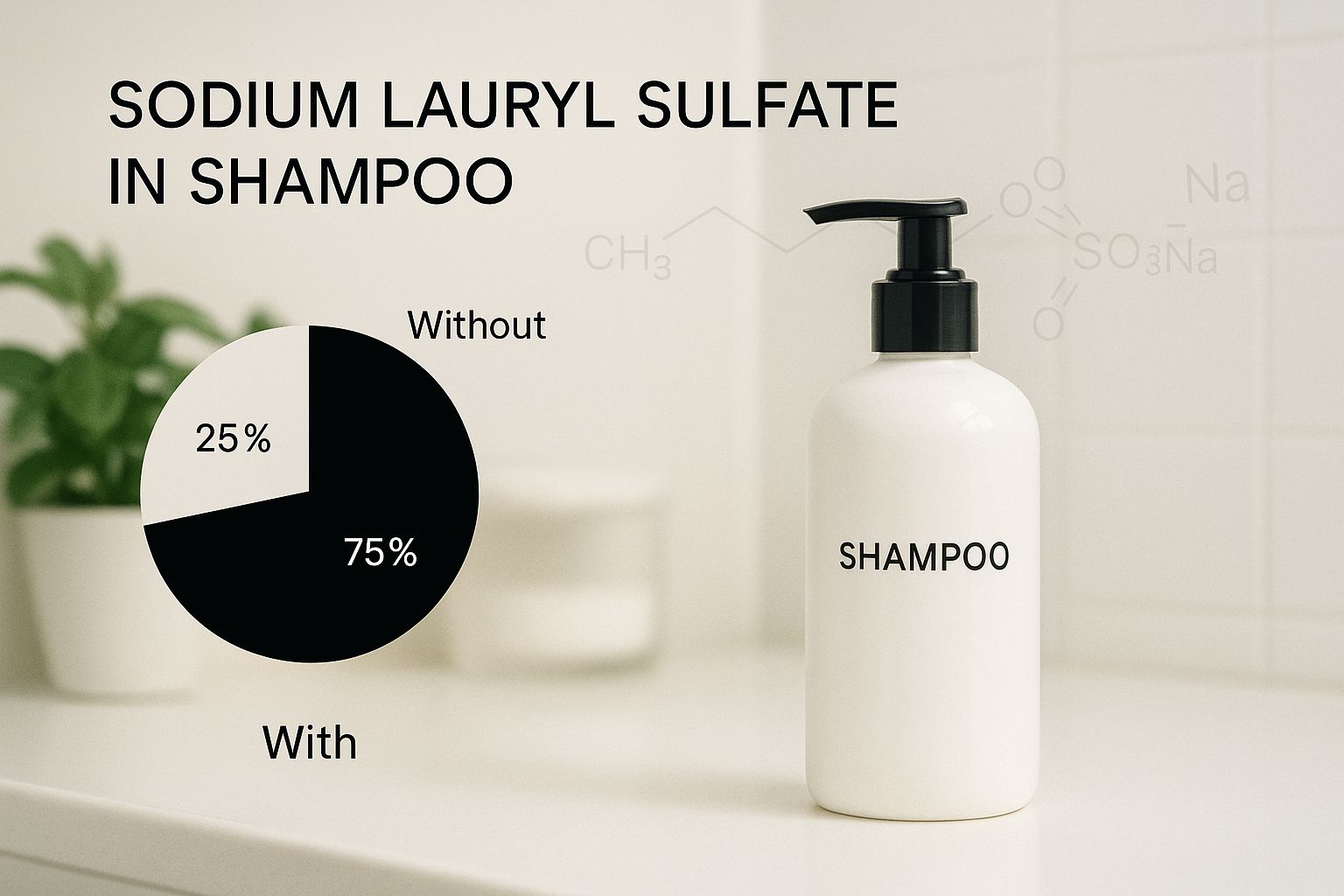
This infographic illustrates the chemical structure of sodium lauryl sulfate (SLS), a common sulfate in traditional shampoos. It highlights the stark contrast between these harsh cleansers and the peaceful experience we associate with self-care. The image prompts us to consider gentler alternatives, visually representing the movement towards sulfate-free products.
Moving away from harsh sulfates means adopting a kinder, more natural approach to hair care. In the first week, your hair might feel different because your scalp is adapting to retaining its natural oils. This is perfectly normal. Give it time. By the three-month mark, many experience a noticeable improvement.
Real Stories, Real Results
Let's hear from people who have already made the switch. Those with color-treated hair report extending the time between salon visits, saving both money and reducing chemical exposure. People with sensitive scalps have finally found relief from itching and irritation. And for those with naturally dry hair? They’re rediscovering what their hair feels like when it's not constantly stripped of its natural moisture.
Many individuals who previously struggled with frizz have noticed their hair becoming more manageable. This is because sulfate-free shampoos help retain moisture, leading to smoother strands. If you're already thinking about the ingredients in your shampoo, you might also be considering other lifestyle changes. For those exploring new career paths, there are helpful career change tips.
The Adjustment Period: What to Expect
Let's address the initial adjustment phase. Yes, your hair might feel a little oilier or appear slightly dull at first. This is simply your scalp overproducing oil to compensate for the absence of harsh sulfates. Be patient. Your scalp will rebalance, and your hair will adjust. For a deeper dive into selecting the right shampoo for you, you can explore resources like the importance of using a good shampoo.
To help visualize the key differences, take a look at the table below:
To better understand the transition, let's compare traditional and sulfate-free shampoos side-by-side.
Traditional vs Sulfate-Free: What Really Changes
A detailed comparison showcasing the actual differences between sulfate and sulfate-free shampoos across crucial hair health factors.
| Hair Factor | With Sulfates | Sulfate-Free Results | Timeline to Notice |
|---|---|---|---|
| Cleanliness | Removes oil and dirt effectively | Cleanses gently, preserves natural oils | Immediate |
| Color Vibrancy | Can fade color faster | Helps maintain color vibrancy | 2-4 weeks |
| Scalp Health | Can dry out and irritate the scalp | Soothes and balances the scalp | 1-2 weeks |
| Natural Moisture | Strips hair of natural oils | Preserves natural moisture | 1-2 weeks |
| Frizz Control | May contribute to frizz due to dryness | Reduces frizz and improves manageability | 4-8 weeks |
As you can see, while the initial shift might present a slight adjustment, the long-term benefits of sulfate-free shampoos are substantial. Switching to a sulfate-free shampoo is an investment in your hair's health and appearance. The results are often well worth the initial transition.
Finding Your Hair's Perfect Sulfate-Free Match
What works for your friend's hair might not work for yours. Just like skincare, hair care is incredibly personal. There’s no one-size-fits-all solution, especially when it comes to sulfate-free shampoos. Let’s explore how to choose one that truly complements your hair.
Understanding Your Hair's Needs
Think of it like watering plants: you wouldn’t drench a delicate fern with the same pressure you’d use for a sturdy cactus. Fine, oily hair and thick, curly hair have very different needs. A volumizing sulfate-free shampoo designed for fine hair could leave thicker hair feeling limp and greasy. On the flip side, a rich, hydrating formula meant for curls might overwhelm fine hair, weighing it down.
This is where understanding your hair type becomes essential. We're talking about its porosity (how well it absorbs moisture), its density (how many strands you have), and its damage level (from coloring, heat styling, or environmental factors). These factors determine which sulfate-free shampoo will truly nourish your hair.
Matching Shampoo to Hair Type
So, how do you find "the one"?
-
Fine, Oily Hair: Look for lightweight sulfate-free shampoos that cleanse without adding extra moisture. Ingredients like tea tree oil or apple cider vinegar can help balance oil production. Volumizing agents are a plus, as long as they don't weigh your hair down.
-
Thick, Curly Hair: Hydration and frizz control are key. Sulfate-free shampoos with emollients like shea butter, coconut oil, or argan oil can replenish moisture and define curls. Look for ingredients that fight frizz without leaving a heavy residue.
-
Damaged Hair: Regardless of hair type, damaged hair benefits from reparative ingredients like keratin or amino acids. These ingredients can help strengthen the hair shaft, minimizing breakage and improving overall hair health.
Real-World Success Stories
Sarah, who has fine, oily hair, struggled for years with limpness after using traditional shampoos. Switching to a lightweight, volumizing, sulfate-free formula transformed her hair, adding bounce and volume without sacrificing cleanliness. Maria, on the other hand, has thick, curly hair that was perpetually frizzy and dry. A hydrating sulfate-free shampoo with shea butter tamed her frizz and revitalized her curls.
These are just two examples of the countless people who have found their perfect sulfate-free match.
This increasing demand for personalized hair care contributes to a growing market. By 2030, the Australian professional hair care market is projected to reach approximately $312 million, growing at a CAGR of 2.1% from 2024 to 2030. The global shift towards natural and organic products, including sulfate-free shampoos, is likely influencing Australian consumers. Learn more about these market trends here. As the market expands, more options tailored to your specific hair type and concerns will become available, making it easier than ever to achieve your hair goals.
Cracking The Code: What Makes A Great Sulfate-Free Formula
Reading ingredient lists can be confusing. Instead of feeling overwhelmed, let's equip you to become a sulfate-free shampoo expert. This isn't just about avoiding sulfates; it's about understanding which gentle cleansers, like coco-glucoside and decyl glucoside, actually work and which are just marketing hype.
Decoding the Ingredients
Think of a sulfate-free shampoo formula like a cake recipe. The cleansers are your flour, essential but basic. The "supporting cast"—humectants, proteins, and emollients—are what make the cake delicious! Humectants, like glycerin and hyaluronic acid, attract moisture, keeping hair hydrated. Proteins, like keratin and amino acids, strengthen the hair shaft, minimizing breakage. Emollients, such as shea butter and argan oil, smooth the hair cuticle for shine and less frizz.
Some ingredients sound scary but are actually helpful. Cetyl alcohol, despite the name, is a fatty alcohol, an emollient that softens hair. On the flip side, seemingly innocent ingredients can cause problems. Some fragrances, for example, can irritate sensitive scalps. For more on hair washing, check out this helpful guide: How Often Should You Shampoo Your Hair?
Understanding the Synergy
A great sulfate-free shampoo relies on ingredient synergy. Gentle cleansers without enough moisturizing and strengthening ingredients can leave hair dry and brittle. Conversely, using harsh cleansers alongside hydrating ingredients defeats the purpose of ditching sulfates. That's why understanding each ingredient's role is so important.
Spotting a Winning Formula
Let's look at some real-world examples. A shampoo with coco-glucoside and decyl glucoside, combined with glycerin, hydrolyzed keratin, and argan oil, points to a balanced formula promoting gentle cleansing, hydration, and strength. A shampoo relying on harsh surfactants like sodium cocoyl isethionate, even without sulfates, might still strip your hair's natural oils. This knowledge empowers you to choose effective products, not just marketing promises.
Your Guide to Key Ingredients
To make choosing a shampoo easier, we've created a handy guide:
To simplify things, let's look at a quick reference guide.
Sulfate-Free Ingredient Decoder Guide
This table lists essential ingredients found in effective sulfate-free shampoos, explains their functions, and highlights the hair concerns they address best.
| Key Ingredient | What It Does | Best Hair Types | Look For If You Have... |
|---|---|---|---|
| Coco-Glucoside | Gentle cleanser | All hair types | Sensitive scalp |
| Decyl Glucoside | Gentle cleanser | All hair types | Dry or damaged hair |
| Glycerin | Humectant (attracts moisture) | Dry, frizzy hair | Dry scalp |
| Hyaluronic Acid | Humectant (attracts moisture) | Dry, damaged hair | Dehydrated hair |
| Keratin | Strengthens and repairs hair | Damaged, brittle hair | Breakage, split ends |
| Amino Acids | Building blocks of protein, strengthen | All hair types | Weak, thinning hair |
| Shea Butter | Emollient (softens and smooths) | Dry, curly hair | Frizz, dryness |
| Argan Oil | Emollient (softens and smooths) | Dry, frizzy, damaged hair | Dullness, breakage |
By understanding these key ingredients, you can decode ingredient lists and choose sulfate-free shampoos that truly deliver.
Navigating The Transition Without Losing Your Mind
Let's be frank: switching to a sulfate-free shampoo isn't always a walk in the park. It's better to be prepared than surprised. We're going to explore that sometimes-tricky "adjustment period" and share real stories from people who've successfully made the switch. 
Understanding the Adjustment Period
During the first few weeks, your hair might feel a bit more oily, look a little dull, or just act differently than usual. This is because your scalp, used to having its natural oils stripped away by sulfates, starts to overproduce oil to compensate. Imagine a plant used to the dry desert suddenly finding itself in a humid rainforest – it takes time to adapt. This adjustment period can last anywhere from a few weeks to a couple of months.
It's important to understand the difference between this normal adjustment period and a product that simply doesn't agree with your hair. If your hair feels excessively oily, weighed down, or if you have scalp irritation that lasts longer than a few weeks, the sulfate-free shampoo might not be the best choice for you. You might find this helpful: Unlocking the Secrets to a Perfect Hair Care Routine.
Easing the Transition: Tips from the Pros
Hair care professionals have a few tricks up their sleeves to help smooth out the transition:
-
Clarifying Treatments: Begin with a clarifying treatment to remove any leftover product buildup from your old shampoo. This is like hitting the reset button for your hair.
-
Conditioning Adjustments: You might need to tweak your conditioning routine. If your hair feels oily, try a lighter conditioner or apply it only to the ends. If your hair feels dry, use a richer, more hydrating conditioner.
-
Washing Frequency: You might not need to wash your hair as frequently with a sulfate-free shampoo. Experiment to find what works for you. Starting with every other day, or even every third day, might be a good place to begin.
-
Styling Product Changes: Sulfate-free shampoos can interact differently with styling products. You might discover some products don't work as well, or that you need less than before.
-
Brush Selection: A boar bristle brush can help distribute your scalp's natural oils, which can be really helpful during the adjustment period.
Real-World Experiences
Many people find the transition a little challenging at first. But sticking with it often pays off. A common experience is the “aha moment” a few months in, when hair suddenly feels healthier, stronger, and easier to manage. This is when the real benefits of using a sulfate-free shampoo become clear. The Asia Pacific region had a market size of USD 1.17 billion in 2024 and is projected to reach USD 2.51 billion by 2033. This growth is possibly fueled by increasing consumer awareness and a growing preference for natural and organic products, a trend likely mirrored in the Australian market. You can find more information here.
Modifying Your Routine
Switching to a sulfate-free shampoo often means adjusting your whole hair care routine. It's like redecorating a room – changing one thing often means changing other things to make it all work together. This could involve how often you wash your hair, or the types of styling products you use. For example, someone with oily hair might find they can go longer between washes, while someone with dry hair might need to add a deep conditioning treatment. These adjustments are key to getting the most out of a sulfate-free shampoo and achieving your hair goals. Taking this broader approach is important for long-term success with sulfate-free shampoo.
By understanding the adjustment process and using these practical tips, you can confidently transition to a sulfate-free shampoo and enjoy the long-term benefits of healthier, more vibrant hair.
Smart Shopping Strategies That Save Money And Disappointment
Sulfate-free shampoos come in a huge range of prices, from the everyday finds at your local drugstore to the fancy bottles lining the shelves of high-end salons. This can make finding the right one feel a bit like navigating a minefield – how do you avoid wasting money on products that just don't work for you? Let's break down some smart shopping strategies to help you find your perfect match.
Decoding Marketing Claims
First things first, don't let those shiny labels and buzzwords fool you. Just because a shampoo boasts "natural" or "organic" ingredients doesn't automatically mean it's sulfate-free, or even necessarily good for your hair. Always look for a clear "sulfate-free" claim on the bottle and, more importantly, double-check the ingredient list. Remember those key sulfate-free surfactants we talked about earlier, like coco-glucoside and decyl glucoside? Those are the ingredients you want to see. And even if a shampoo is sulfate-free, watch out for other harsh surfactants that can still strip your hair.
Price vs. Quality: What to Expect
It's tempting to think that a higher price tag means a better product, but that's not always true when it comes to sulfate-free shampoos. Some drugstore brands can actually outperform their pricier counterparts. The real magic is in the formula, not the marketing. So don't shy away from trying more affordable options – you might be pleasantly surprised! That being said, some luxury shampoos do contain unique ingredients or offer specialized benefits that might justify the extra cost if they address your specific hair needs.
The Art of Product Testing
Finding the perfect sulfate-free shampoo often involves a bit of experimentation. Think of it like trying on shoes – you need to see how they feel before you commit. Pay close attention to these key aspects during your first few washes:
- Scalp Feel: Does your scalp feel clean and comfortable, or is it dry, itchy, or irritated?
- Hair Texture: Is your hair softer, smoother, and easier to manage, or does it feel dry, brittle, or weighed down?
- Shine and Frizz: Has your hair's shine improved? Is there less frizz?
If your hair feels excessively oily, heavy, or if you experience persistent scalp irritation, the shampoo might not be the right fit. However, don't be too quick to dismiss a product after just one wash. Remember that your hair sometimes needs time to adjust to a new formula. Give it a few weeks. But if the issues persist, it's time to move on to something else.
Finding Real Reviews
Reading reviews from other users can be incredibly helpful, especially those from people with similar hair types and concerns as yours. Websites and blogs that focus on hair care often have detailed reviews and comparisons that can offer valuable insights. Just remember to take product website reviews with a grain of salt and look for unbiased opinions.
Shopping Smart: Timing is Key
Sales and promotions are your best friend when it comes to saving money. Keep an eye out for special offers from retailers and online stores. Buying in bulk, if it makes sense for you, can also bring down the cost per bottle. Sometimes, knowing the source of your product can impact your purchasing decision. This can extend to researching individuals or companies, much like conducting Background Checks in The UK allows for verification of information.
Building an Effective Routine Without Breaking the Bank
You don't need a cupboard full of products to have a great hair care routine. A good sulfate-free shampoo, a conditioner that works for your hair type, and a weekly deep conditioning treatment can be all you need. You might also consider adding a clarifying shampoo once a month to remove any product buildup.
By using these smart shopping strategies, you can find a sulfate-free shampoo that truly works for you without spending a fortune. You'll learn to see past the marketing hype and focus on what really matters: a product that meets your hair's unique needs. Remember, finding the right shampoo is a personal journey, and these tips will help you navigate it successfully.
Your Sustainable Path To Healthier Hair
Now that we’ve gotten to the bottom of sulfate-free hair care, let's talk about creating a personalized plan just for you. This isn’t about chasing some perfect hair fantasy, but about building a routine that actually works in your day-to-day life.
Building Your Sulfate-Free Routine
Switching to sulfate-free shampoo is a bit like learning to bake sourdough bread. It requires a little patience and a willingness to experiment. Here’s how to build a routine you can stick with:
- Start Fresh: Imagine painting on a dirty canvas. You wouldn't get the best results, right? The same goes for your hair. Start by using a clarifying treatment to remove any product buildup. This gives your sulfate-free shampoo a clean slate to work on.
- Choose the Right Tool for the Job: Just like you wouldn't use a hammer to paint a wall, you need the right shampoo for your hair. Select a sulfate-free shampoo formulated for your specific hair type and concerns.
- Practice Makes Perfect: It takes time for your hair and scalp to adjust. Don’t give up if you don't see amazing results right away. Give it a few weeks – think of it as a trial run.
- Listen to Your Hair: Your hair will tell you what it needs! Pay attention to how it feels and looks. Softer? Shinier? Easier to manage? Or does it feel dry, greasy, or weighed down? These are all clues.
- Tweak and Adjust: If your first choice isn’t quite right, don’t be afraid to try a different sulfate-free shampoo. Sometimes it takes a little experimentation to find the perfect fit.
- Enjoy the Process: As you start to see less frizz, more shine, or maybe even stretch the time between salon visits, celebrate those small victories. Your hair will thank you!
Maintaining Your Routine Long-Term
Once you’ve found your sulfate-free rhythm, here’s how to keep it going:
- Seasonal Shifts: Think about how you adjust your skincare routine as the weather changes. The same goes for your hair. You might need extra moisture in the winter and a lighter conditioner in the summer. You might even be interested to see how shampoo has evolved over time in this fascinating article: The Evolution of Shampoo.
- Stay Curious: The world of hair care is always changing. Keep up-to-date with new ingredients, products, and techniques. Even something as simple as sourcing ingredients can benefit from a thorough approach. Just as you would research a company, learning about ingredient origins can be valuable. This might even involve something like a Background Check in The UK.
- Ask the Experts: If you’re having persistent hair troubles, don't hesitate to talk to a stylist or trichologist. They can offer personalized advice and help you troubleshoot any problems.
By following these tips, you can create a sustainable sulfate-free routine that keeps your hair healthy and looking its best for years to come. It starts with understanding, but consistency and staying informed are key.
Ready to begin your journey to healthier hair? Explore a variety of sulfate-free shampoos and other hair care products at On Line Hair Depot. We offer a carefully selected collection of professional-grade products to help you achieve your hair goals.


