

Tired of Greasy Hair? A Guide to Fresh, Voluminous Locks
Is your oily hair constantly weighing you down? This guide provides eight essential hair care tips for oily hair, offering practical solutions for achieving lasting freshness and volume. Learn how the right shampoos, conditioners, and styling techniques can transform your hair. Discover the power of clarifying shampoos, double cleansing, strategic conditioning, clay masks, dry shampoo, cool rinses, lightweight styling products, and scalp exfoliation. Get ready to say goodbye to greasy roots and hello to bouncy, healthy-looking hair.
1. Choose Clarifying Shampoos with Sulfates
Oily hair can be a constant battle, leaving your locks looking limp, greasy, and lifeless. If you're struggling with excess oil, the right shampoo can make all the difference. For effective hair care for oily hair, incorporating a clarifying shampoo with sulfates into your routine can be a game-changer. Unlike dry or damaged hair that benefits from sulfate-free formulas, oily hair thrives on the deep cleansing action of sulfates like sodium lauryl sulfate (SLS) and sodium laureth sulfate (SLES). These ingredients are powerful cleansing agents that effectively remove the excess sebum, product buildup, and environmental pollutants that weigh down oily hair and contribute to that greasy appearance. Clarifying shampoos with sulfates provide the thorough scalp detoxification that oil-prone scalps require to look and feel their best.
Clarifying shampoos with sulfates offer a number of benefits for those with oily hair. They effectively remove excess oil and grease, preventing hair from appearing flat and lifeless. By thoroughly cleansing the scalp, these shampoos can also extend the time between washes, which can be a major plus for busy individuals. Furthermore, a clean scalp provides a better foundation for styling, leading to improved styling results and longer-lasting hairstyles.
However, it's important to be aware of the potential downsides of using clarifying shampoos with sulfates. These shampoos can be too harsh if used daily, potentially stripping away natural oils and leading to dryness, particularly at the ends of the hair. They can also strip color from treated hair, so those with color-treated hair should use them sparingly or opt for color-safe clarifying shampoos. Additionally, some individuals with sensitive scalps may experience irritation.
Here are some examples of clarifying shampoos available in Australia that are suitable for oily hair:
- Neutrogena Anti-Residue Shampoo: This shampoo is excellent for a weekly deep cleanse to remove stubborn product buildup.
- Head & Shoulders Clinical Strength: Formulated for oily, dandruff-prone scalps, this shampoo tackles both excess oil and scalp flaking.
- Paul Mitchell Tea Tree Special Shampoo: This invigorating shampoo can be used daily for a refreshing cleanse and oil control.
To maximize the benefits and minimize the potential drawbacks of clarifying shampoos with sulfates, consider the following tips:
- Use clarifying shampoo 2-3 times per week, not daily: This frequency helps to effectively remove excess oil without over-drying the hair.
- Focus application on the roots and scalp area: This targets the source of oil production and avoids stripping the ends of their natural moisture.
- Follow with a lightweight conditioner on the ends only: This helps to hydrate and protect the ends without weighing down the roots.
- Alternate with gentler, sulfate-free shampoos: This balanced approach helps to maintain scalp health and prevent over-stripping.
This method has been popularized by celebrity hairstylist Jen Atkin, who often recommends clarifying shampoos for her clients with oily hair, as well as brands like Neutrogena and professional salon chains such as Supercuts.
The following infographic illustrates the optimal process for using a clarifying shampoo:
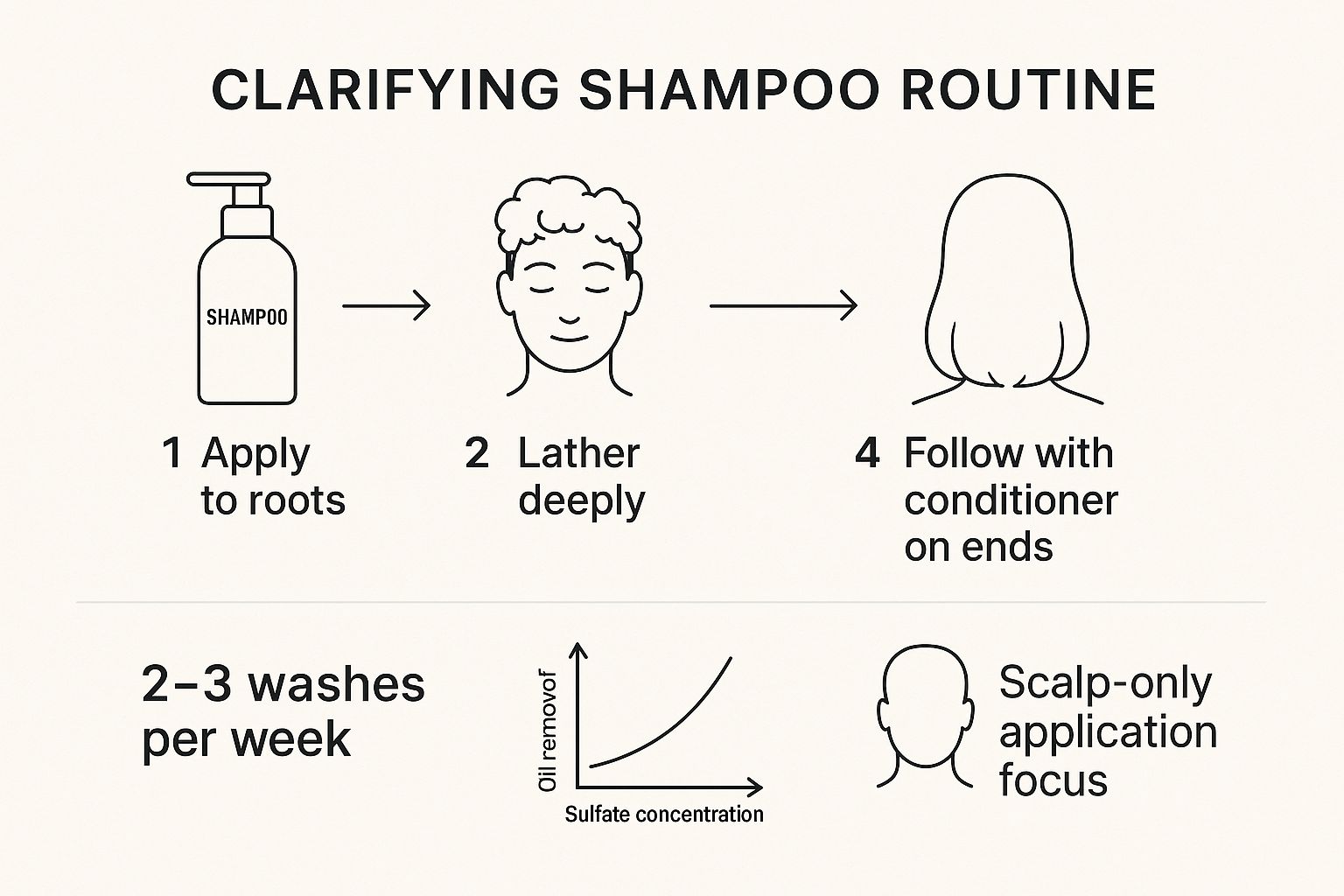
This infographic visualizes the key steps in the clarifying shampoo routine, highlighting the importance of focusing the application on the scalp, lathering deeply, and following up with conditioner on the ends only. It also emphasizes the recommended frequency of use (2-3 times per week) and illustrates the relationship between sulfate concentration and oil removal.
As shown in the infographic, applying the clarifying shampoo primarily to the scalp where oil production is concentrated maximizes its effectiveness while minimizing potential dryness in the lengths and ends. The recommended 2-3 washes per week strike a balance between thorough cleansing and maintaining the scalp's natural moisture barrier. The visual representation underscores the importance of following each step correctly for optimal results in managing oily hair. By adhering to this process, individuals with oily hair can effectively leverage the benefits of clarifying shampoos containing sulfates to achieve a cleaner, healthier, and more manageable mane.
2. Master the Double Cleansing Technique
Battling oily hair can feel like a constant struggle, but a technique borrowed from Korean skincare routines might just be the game-changer you need. Double cleansing, as the name suggests, involves washing your hair twice in a single shower. This two-step process isn't about using more shampoo overall, but rather about strategically using it to first break down excess oil and product buildup, and then to thoroughly cleanse the scalp and hair. This method ensures a level of purification that a single wash often misses, paving the way for healthier, more manageable hair.
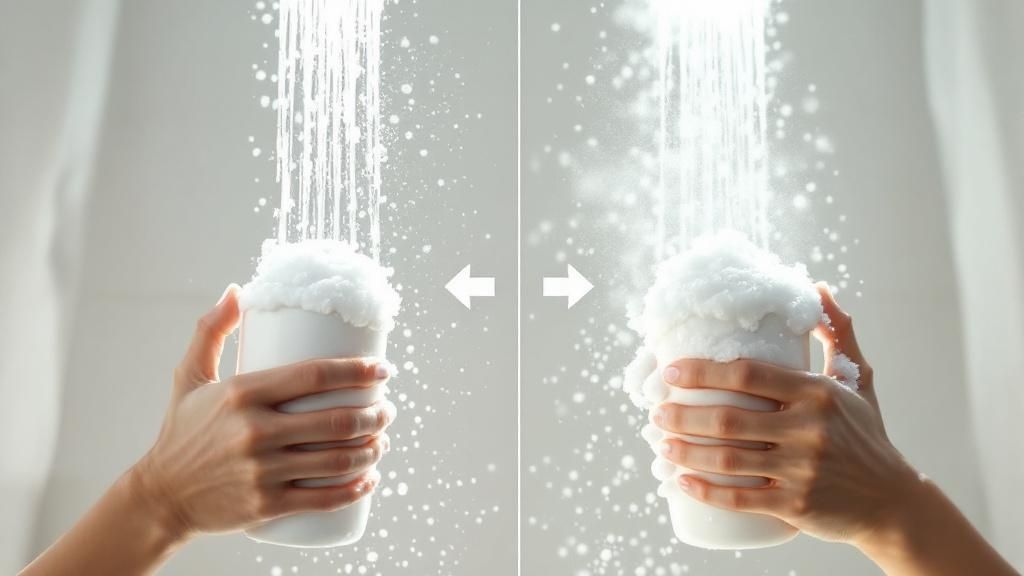
Think of it like this: the first wash acts as a pre-cleanse, targeting the stubborn sebum, styling products, and environmental pollutants that accumulate on your scalp and hair throughout the day. This initial wash effectively lifts and loosens these impurities. The second wash then acts as the true cleanser, deeply penetrating the now-unburdened hair follicles to remove any remaining residue and leave your scalp feeling truly clean. This two-pronged approach is particularly effective for those with oily hair, as it addresses the root cause of the problem—excess sebum production—and sets the stage for better product absorption and longer-lasting freshness.
Double cleansing has gained traction in the hair care world thanks in part to the influence of K-beauty routines, professional salon treatments, and endorsements from prominent figures like hair influencer Manes by Mell and Ouai haircare founder Jen Atkin. These examples showcase the versatility of the technique, highlighting its effectiveness in both professional and at-home settings. If you’re looking to incorporate professional-grade practices into your routine, double cleansing is a simple yet effective addition.
Here are some key tips for mastering the double cleansing technique for oily hair care:
- First Wash – The Breakdown: Use a smaller amount of shampoo than you normally would for a single wash. Focus on your scalp, massaging gently to loosen the oil and product buildup. Don't worry about lathering too much at this stage. Think of this as your pre-cleanse.
- Second Wash – The Deep Cleanse: Use a slightly larger amount of shampoo and focus on creating a rich lather. Massage your scalp thoroughly for at least one minute, ensuring the shampoo reaches every area. This is where the real cleansing magic happens.
- Frequency: While the benefits of double cleansing are undeniable, it's important to avoid over-cleansing. Limit this technique to 2-3 times per week maximum, especially if you’re new to it. Daily double cleansing can strip your scalp of its natural oils, leading to dryness and irritation.
- Product Choice: Choose a shampoo formulated for oily hair, preferably one that’s sulphate-free to avoid further stripping your hair.
While double cleansing offers a host of benefits for oily hair, including thorough removal of stubborn oil buildup, extended time between wash days, and improved product absorption, it also has some potential drawbacks. It does use more shampoo and water than a single wash, takes a bit more time in the shower, and can potentially be too harsh for daily use. Finding the right balance and frequency is key to maximizing the benefits while minimizing the risks. Learn more about Master the Double Cleansing Technique.
By understanding the nuances of the double cleansing technique and tailoring it to your hair's specific needs, you can effectively combat excess oil, improve scalp health, and create a better foundation for styling. This simple yet powerful technique truly deserves its place in any oily hair care regimen, offering a targeted approach to managing sebum production and promoting long-lasting freshness. It's a valuable tool for anyone, from the budget-conscious online shopper to the eco-conscious enthusiast, seeking a more effective way to manage their oily hair. Whether you’re a salon professional looking for advanced techniques or a DIY stylist experimenting at home, double cleansing can significantly elevate your hair care routine.
3. Apply Conditioner Strategically to Mid-Lengths and Ends Only
One of the most crucial aspects of hair care for oily hair is understanding how to properly condition. While conditioner is essential for maintaining hair health, its application requires a strategic approach for those with oily scalps. Applying conditioner incorrectly can exacerbate oiliness, leading to limp, lifeless hair and a need for more frequent washing. This section will delve into the vital practice of applying conditioner strategically to mid-lengths and ends only, a technique that can significantly transform your hair care routine for oily hair.
This method focuses on delivering moisture where it’s truly needed while avoiding the already oil-rich scalp. People with oily hair often experience excess sebum production at the roots. Sebum is a natural oil that moisturizes the hair and scalp. However, overproduction can lead to a greasy appearance and weighed-down hair. Applying conditioner to the scalp simply adds to this existing oiliness, creating build-up and contributing to that undesirable greasy look and feel. By concentrating conditioner application from the mid-lengths to the ends, you’re targeting the areas that tend to be drier and more prone to damage, especially from heat styling, environmental factors, or chemical treatments like colouring. This targeted application technique allows you to reap the moisturizing benefits of conditioner without exacerbating oiliness at the roots.
This technique is particularly successful when incorporated into professional salon conditioning treatments. Stylists understand the science behind hair care for oily hair and often utilize this targeted approach to ensure clients leave with voluminous, healthy-looking hair. Trichologists, specialists in hair and scalp health, also commonly recommend this practice as part of a tailored hair care routine. Even celebrity hairstylists employ this strategy when preparing their clients for red carpet events, demonstrating the effectiveness of this method in achieving glamorous, bouncy hair. For example, celebrity colorist Rita Hazan is known for her expertise in maintaining vibrant, healthy hair, and strategic conditioner application is undoubtedly a part of her arsenal. Similarly, Redken brand education programs emphasize this technique in their training, highlighting its importance within the professional hair care industry.
To effectively implement this technique into your own hair care routine for oily hair, follow these tips:
- Start at ear level: Imagine a horizontal line across your head at ear level. This serves as your starting point for conditioner application. Work the product downwards, ensuring thorough coverage of the mid-lengths and ends.
- Use a wide-tooth comb: After applying the conditioner, use a wide-tooth comb to distribute it evenly. This ensures every strand benefits from the conditioning treatment and prevents product clumping.
- Choose lightweight, volumizing conditioners: Opt for conditioners specifically formulated for oily hair or fine hair. These typically have a lighter consistency and won't weigh your hair down. Look for terms like "volumizing," "balancing," or "lightweight" on the label.
- Rinse thoroughly with cool water: A final rinse with cool water helps to seal the hair cuticles, promoting shine and smoothness. This also helps to remove any excess product, further preventing build-up.
While this method offers significant advantages, it also has some potential drawbacks. Some people may initially feel like they aren't using enough product, which can take some getting used to. It also requires a more careful and precise application technique compared to simply slathering conditioner all over. Mastering the right amount of product and the correct application technique may require practice.
Pros:
- Prevents greasy roots: By avoiding the scalp, you prevent the added oiliness that can lead to limp, greasy-looking hair.
- Maintains hair health and volume: You still deliver moisture to the drier parts of your hair, ensuring overall hair health without compromising volume.
- Reduces product build-up: Less product on the scalp translates to less build-up, promoting a healthier scalp environment.
- Allows for more frequent washing: With less product build-up, you may find you can go longer between washes.
Cons:
- Requires a more careful application technique: It takes more precision to apply conditioner only to the mid-lengths and ends.
- May feel like you're not using enough product: This is a common initial feeling that usually subsides with practice.
- Takes practice to master the right amount: Determining the perfect amount of conditioner for your hair length and texture might take some experimentation.
By incorporating this targeted conditioning method into your hair care routine for oily hair, you can effectively maintain hair health, prevent excess grease, and enjoy voluminous, bouncy locks. This technique, embraced by professionals and everyday individuals alike, provides a practical and effective solution for managing oily hair and achieving desired hair goals.
4. Incorporate Weekly Clay Mask Treatments
Dealing with oily hair can feel like a constant battle. You wash it, it looks great for a few hours, and then the shine returns, leaving your hair looking limp and lifeless. While frequent washing might seem like the solution, it can actually exacerbate the problem by stripping your scalp of its natural oils, prompting it to produce even more. This is where incorporating weekly clay mask treatments into your hair care routine can be a game-changer for achieving long-term oil control and improved scalp health. Clay masks, often lauded for their benefits in facial skincare, offer a powerful, natural solution for oily hair and scalp care, making them a valuable addition to any hair care regimen, particularly for those in the AU region struggling with excess oil.
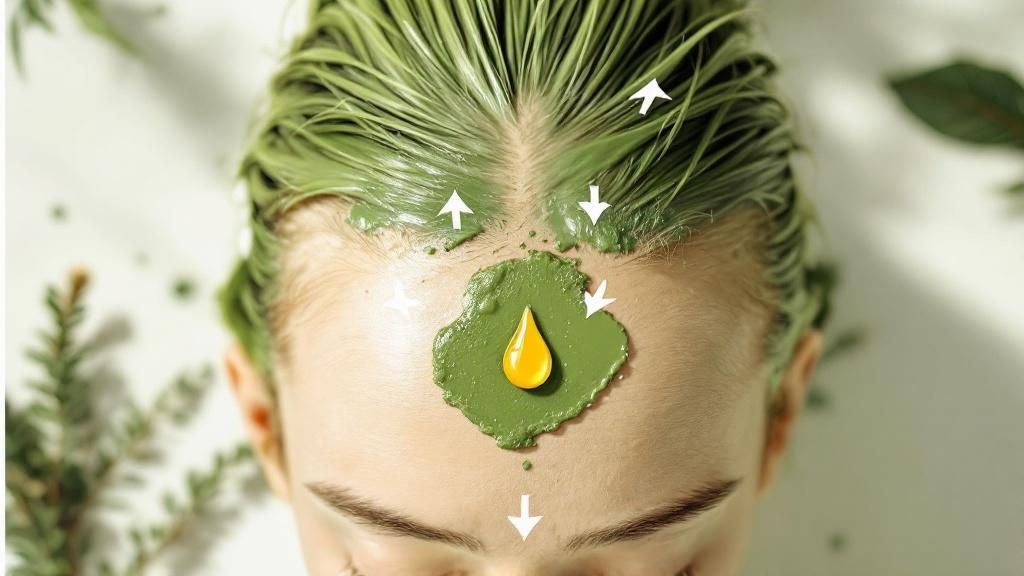
Clay masks work by absorbing excess sebum, the oily substance produced by your scalp. Several types of clay are beneficial for hair, including bentonite clay, kaolin clay, and rhassoul clay. These natural clays act like a sponge, drawing out impurities, product buildup, and excess oil without stripping away essential moisture. This process not only helps regulate oil production over time but also detoxifies the scalp, creating a healthier environment for hair growth. Furthermore, clays are rich in minerals that nourish hair follicles, contributing to stronger, healthier hair. This makes clay masks an excellent choice for everyone from salon professionals looking for professional-grade solutions for their clients to everyday consumers seeking specialised hair care.
The benefits of incorporating clay masks into your hair care for oily hair routine are numerous. They offer a natural alternative to harsh chemical treatments, providing a deep cleanse without over-stripping the scalp. Regular use can extend the time between washes, saving you time and effort while also improving scalp health over time. This is a particularly appealing feature for busy individuals and those conscious of water usage. For those with colour-treated hair, curly hair, or even thinning hair, the gentle yet effective cleansing action of clay can be a welcome relief, addressing oiliness without compromising the integrity of delicate strands.
Of course, like any hair care treatment, clay masks have their considerations. They can be messy to apply and rinse, and using them too frequently can lead to dryness, especially for those with already dry ends. Adding this step to your routine also requires extra time. Some clays, especially bentonite, can temporarily darken light-colored hair, so those with blonde or grey hair should opt for kaolin or rhassoul clay, or perform a strand test before applying it to their entire scalp.
Here are some tips for successfully incorporating clay masks into your hair care routine:
- Mix clay with apple cider vinegar: Instead of water, try mixing your clay powder with apple cider vinegar. The acidity helps balance the scalp's pH and adds extra shine.
- Targeted application: Apply the clay mask primarily to your scalp and roots, avoiding the lengths of your hair, especially if your ends tend to be dry.
- Frequency: Start with once a week and adjust based on your hair's needs. Bi-weekly is usually sufficient for most. Overuse can lead to dryness.
- Follow with conditioner: After rinsing out the clay mask, apply a lightweight conditioner to the ends of your hair to maintain moisture.
Numerous examples demonstrate the efficacy of clay in hair care. The Aztec Secret Indian Healing Clay is a popular and affordable option for DIY treatments. For those preferring a ready-made product, the Christophe Robin Cleansing Purifying Scrub with Sea Salt combines the benefits of sea salt and clay for a deep cleanse. The Briogeo Scalp Revival Charcoal + Coconut Oil Micro-Exfoliating Shampoo, while not a pure clay mask, incorporates charcoal, which offers similar absorbing properties, alongside coconut oil for hydration. These products, along with the growing natural hair care movement and endorsements from beauty influencers like Hyram and brands like Christophe Robin, highlight the rising popularity and proven effectiveness of clay for oily hair care. This approach caters to a diverse audience, from budget-conscious online shoppers looking for deals to eco-conscious consumers seeking natural and cruelty-free ingredients. Regardless of your specific hair concerns, incorporating a weekly clay mask can be a valuable step in achieving a healthier, more balanced scalp and beautifully manageable hair.
5. Use Dry Shampoo as Prevention, Not Just Emergency Fix
For those battling oily hair, dry shampoo is often seen as a last-minute saviour, a quick fix for greasy roots when you're short on time. However, this powerful product can be so much more than just an emergency solution. Employing dry shampoo preventively, rather than reactively, is a game-changer in hair care for oily hair, allowing you to extend the life of your style and significantly reduce the frequency of washing. This proactive approach intercepts oil at the source, keeping your hair looking fresh and voluminous for longer.
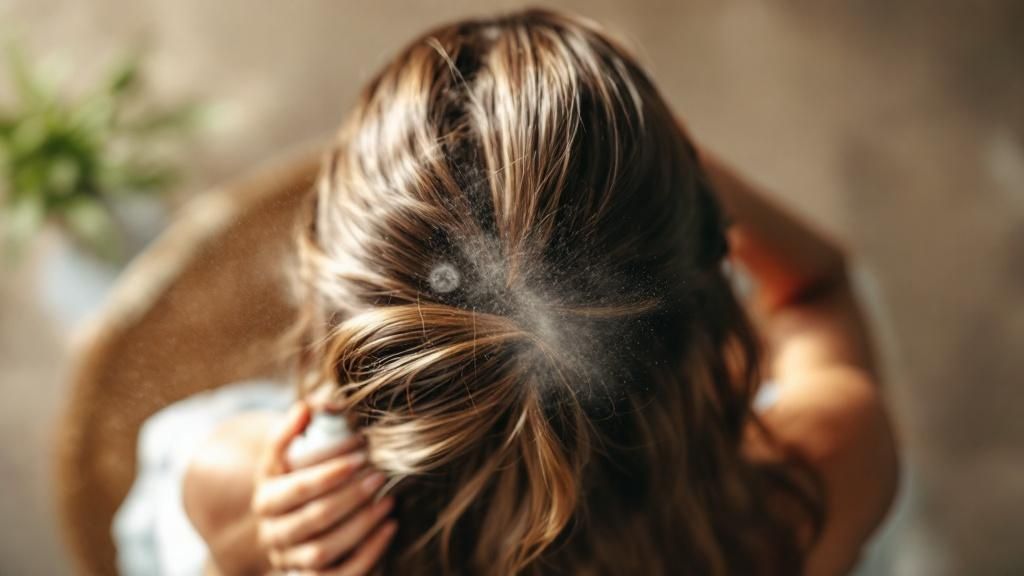
This method works by applying dry shampoo to clean, dry hair before excess oil becomes a problem. The dry shampoo acts as a preemptive barrier, absorbing sebum as it's produced by your scalp. Think of it as blotting paper for your roots, soaking up the oil before it has a chance to make your hair look greasy and limp. This proactive approach allows you to maintain a cleaner, fresher look for longer, even in humid Australian climates.
The benefits of this preemptive strike are numerous. It significantly extends the time between washes, preventing the stripping of natural oils that can occur with frequent shampooing. This, in turn, can help to balance your scalp's oil production over time. Furthermore, preventive application adds texture and volume, giving your hair a boost and making styling easier and more effective. Imagine enjoying bouncy, full hair for days, not just hours, after washing – that's the power of preventive dry shampoo.
Here’s a breakdown of the pros and cons:
Pros:
- Significantly extends time between washes: This is a major advantage for those with oily hair, saving time and effort.
- Prevents hair from looking flat and lifeless: Oil weighs hair down, but dry shampoo absorbs it, maintaining volume and bounce.
- Adds texture for better styling: The added texture provides grip and hold, making styling easier and more versatile.
- Reduces overall washing frequency: Less washing means less damage from heat styling and chemical exposure, leading to healthier hair in the long run.
Cons:
- Can cause product buildup if overused: It's essential to use dry shampoo in moderation and cleanse your hair regularly to avoid buildup.
- May leave white residue if not properly blended: This is especially true for darker hair colours. Choosing a tinted formula or carefully blending the product can help mitigate this issue.
- Some formulas can clog hair follicles: Opting for high-quality dry shampoos and using them sparingly can reduce this risk.
- Requires finding the right formula for your hair color and type: Experimentation is key. Consider your hair colour, texture, and sensitivity when selecting a dry shampoo.
Examples of Effective Dry Shampoos Available in Australia:
- Batiste Dry Shampoo: A readily available drugstore option that offers a variety of scents and formulas, making it a great starting point for experimenting with preventive application.
- Living Proof Perfect Hair Day Dry Shampoo: A high-end option known for its oil-absorbing and volumising properties.
- Klorane Dry Shampoo with Oat Milk: A gentle formula suitable for sensitive scalps, making it a good choice for those prone to irritation.
Tips for Effective Preventive Application:
- Apply to clean hair before bedtime: This allows the dry shampoo to absorb oil overnight, leaving you with fresh hair in the morning.
- Hold can 6-8 inches away from scalp when spraying: This ensures even distribution and prevents product buildup in one area.
- Use a boar bristle brush to distribute and remove residue: This helps to blend the product seamlessly and remove any excess powder.
- Choose tinted formulas that match your hair colour: This is especially important for those with darker hair to avoid a visible white cast.
The preventive use of dry shampoo has been popularised by brands like Living Proof, beauty influencers like Jackie Aina, and celebrity hairstylists like Chris Appleton, all advocating for this proactive approach to oil control. By incorporating this simple yet effective strategy into your hair care routine, you can take control of oil production and enjoy consistently fresh, voluminous hair.
6. Rinse with Cool Water for Sebum Control
Dealing with oily hair can feel like a constant battle. You wash it, it looks great for a few hours, and then the shine returns – the unwanted, greasy kind. While specialized shampoos and styling products play a role in managing oily hair, a simple, cost-effective, and often overlooked technique can significantly impact your hair’s oil production: rinsing with cool water. This practice is a cornerstone of effective hair care for oily hair and deserves a prominent place in your routine.
So, how does this seemingly simple act make such a difference? The science lies in how water temperature affects your scalp's sebaceous glands. These glands are responsible for producing sebum, the natural oil that keeps your scalp and hair moisturized. Hot water, while feeling luxurious, actually stimulates these glands into overdrive, leading to excess sebum production. It can also strip the scalp of its natural oils, prompting it to overcompensate and produce even more oil. Think of it like a vicious cycle of grease.
Cool water, on the other hand, works by constricting the sebaceous glands, effectively regulating sebum production. This temperature-controlled rinsing technique doesn't entirely stop oil production – it simply helps bring it back into balance. Additionally, cool water helps to seal the hair cuticles. When cuticles lie flat, they reflect light more effectively, resulting in smoother, shinier hair and reducing the appearance of oiliness. This natural sealing action also helps to protect the hair shaft from damage and frizz, contributing to overall healthier-looking locks.
The benefits of incorporating a cool water rinse into your hair care for oily hair routine are numerous. It naturally reduces oil production over time, leading to less frequent washing. It enhances hair shine and smoothness, making your hair look and feel healthier. And by preventing overstimulation of the scalp, cool rinsing can also help prevent scalp irritation and dandruff, which are often exacerbated by excess oil. Perhaps the best part? This method costs absolutely nothing to implement.
This practice isn't a new fad; it's rooted in ancient traditions and continues to be endorsed by professionals. Traditional Ayurvedic hair care practices in India have long emphasized the benefits of cool water rinses for healthy hair and scalp. You'll also find this technique employed as a finishing touch in professional salon hair treatments, both here in Australia and internationally, particularly in European spa hair treatments, and is often recommended by trichologists specializing in hair and scalp health. Clearly, the effectiveness of cool water rinses transcends geographical boundaries and cultural practices.
While the advantages are compelling, it's essential to acknowledge the potential downsides. Rinsing with cool water, especially during the colder months in Australia, can be uncomfortable initially. It may also not rinse out thick conditioners as effectively as warm water. Finally, it takes an adjustment period to get used to the sensation.
To ease into this practice, start by rinsing your hair with lukewarm water and gradually decrease the temperature with each wash. You don't need to subject yourself to ice-cold water; a comfortably cool temperature is sufficient. For optimal results, focus the cool water primarily on your scalp area, where the sebaceous glands are located. Another helpful tip is to use cool water only for the final rinse after shampooing and conditioning. Follow up your rinse with a microfiber towel to prevent heat damage from rough drying and further enhance shine and smoothness.
By implementing these simple tips, you can seamlessly integrate this age-old practice into your modern hair care routine. While it may take a bit of getting used to, the long-term benefits for managing oily hair and achieving a healthy, vibrant mane are well worth the effort. This natural, cost-effective technique is a powerful tool in your arsenal against oily hair, contributing to a balanced scalp and beautiful, shining hair.
7. Choose Lightweight, Water-Based Styling Products
Oily hair can be a constant battle, especially when it comes to styling. Heavy products often exacerbate the problem, leaving hair looking limp, greasy, and lifeless. That's why choosing the right styling products is crucial for effective hair care for oily hair. This step deserves its place on this list because it directly addresses a major pain point for those with oily hair: maintaining style and volume without adding to the grease. Opting for lightweight, water-based styling products is a game-changer, offering a path to achieving desirable hairstyles without compromising on hair health or contributing to excess oil.
So, what exactly are water-based styling products, and how do they work their magic? Unlike oil-based counterparts that coat the hair with heavy oils and silicones, water-based products utilize water as their primary solvent. This means they deliver styling benefits without adding excess weight or oil to your already oily hair. Instead, they work with your hair's natural texture, allowing for movement and volume while providing a degree of hold and control.
These lightweight formulations often contain volumizing ingredients that lift the hair at the roots, creating the illusion of fuller, thicker hair. They also tend to absorb quickly, leaving hair feeling clean and manageable rather than sticky or greasy. Common water-based styling products include mousses, light-hold gels, and volumizing sprays. Think of it like this: water evaporates, leaving your style intact without the residue, while oil remains, contributing to that unwanted oily sheen.
For example, Bumble and Bumble Thickening Spray is a cult favourite for adding volume and texture without weighing hair down. Similarly, Ouai Wave Spray offers a beachy texture without the greasy feel often associated with traditional texturizing products. Living Proof Full Thickening Mousse is another excellent choice, providing body and lift without the sticky residue. These are just a few examples of the many water-based styling products available in the AU market, catering to various hair types and styling needs.
Want to learn more about innovative styling products? Learn more about Choose Lightweight, Water-Based Styling Products and explore new options.
Here are some actionable tips to make the most of water-based styling products for oily hair care:
- Apply to damp hair: Water-based products distribute more evenly and effectively on damp hair, ensuring even coverage and preventing product build-up.
- Start with less: It's easier to add more product than to take it away. Begin with a small amount and build up gradually as needed. This helps avoid overloading the hair and contributing to greasiness.
- Focus on mid-lengths and ends: For those with particularly oily roots, concentrating the product on the mid-lengths and ends helps achieve the desired style without exacerbating oiliness at the scalp.
- Look for "weightless" or "volumizing": These keywords often indicate a water-based formula designed to add body and lift without weighing the hair down.
While water-based styling products offer numerous benefits for oily hair, it's important to be aware of the potential drawbacks:
- Hold: They may not provide as strong a hold as heavier, oil-based products. This can be a challenge for those with very thick or coarse hair or for creating intricate hairstyles that require significant hold.
- Cost: Water-based styling products can sometimes be more expensive than traditional styling products.
- Reapplication: You may need to reapply throughout the day, especially in humid climates or for styles that require extra hold.
- Limited options for very strong hold: If you require extremely strong hold for elaborate updos or particularly unruly hair, the options within the water-based category might be limited.
Despite these minor drawbacks, the advantages of using lightweight, water-based styling products for hair care for oily hair far outweigh the disadvantages. By making the switch, you'll be well on your way to achieving voluminous, stylish hair without the unwanted grease and build-up. This approach, popularized by industry leaders like Bumble and Bumble, celebrity stylist Sally Hershberger, and the scientific approach of Living Proof, has revolutionized hair care for oily hair, allowing for greater styling versatility and healthier-looking results. By incorporating these products and techniques into your routine, you can embrace your hair's natural texture and achieve the desired style without compromising on freshness and volume.
8. Implement Scalp Exfoliation for Deep Cleansing
Dealing with oily hair can feel like a constant battle. You wash, rinse, and repeat, yet the grease seems to reappear within hours. While frequent shampooing is often the go-to solution, it can sometimes exacerbate the problem. A crucial step many overlook in their hair care for oily hair routine is scalp exfoliation. Just like the skin on your face, your scalp accumulates dead skin cells, product buildup, and excess sebum, which can clog pores and contribute to that unwanted oily sheen. Regular shampooing, while essential, may not fully remove this buildup. This is where incorporating scalp exfoliation into your hair care regimen becomes a game-changer.
Scalp exfoliation works by deeply cleansing the scalp, removing the debris that regular shampooing might miss. Think of it as a facial for your scalp. There are two main types of scalp exfoliation: physical and chemical. Physical exfoliation involves using a scrub with granules to manually lift away dead skin and buildup. Chemical exfoliation, on the other hand, utilizes ingredients like salicylic acid or glycolic acid to dissolve the bonds between dead skin cells, allowing them to be rinsed away. This process helps to reset the scalp environment, unclog pores, and can even help regulate sebum production over time, leading to a healthier, less oily scalp.
Several popular products effectively target oily scalp concerns. The Briogeo Scalp Revival Charcoal + Coconut Oil Micro-Exfoliating Shampoo offers a convenient way to incorporate physical exfoliation into your wash routine. The charcoal helps to draw out impurities, while the coconut oil provides hydration. For a more intense treatment, the Christophe Robin Cleansing Purifying Scrub with Sea Salt offers a deep cleanse with sea salt granules, ideal for removing stubborn buildup. Alternatively, incorporating a chemical exfoliant like The Ordinary Multi-Peptide Serum for Hair Density can help regulate sebum production and promote a healthier hair growth environment. Finding the right product for your specific needs and scalp sensitivity is crucial for successful implementation.
While the benefits of scalp exfoliation for oily hair are numerous, it's important to approach it with caution. Over-exfoliating can irritate the scalp and potentially disrupt the natural oil balance, leading to increased oil production or even scalp sensitivity.
Pros of Scalp Exfoliation:
- Provides a deeper cleanse: Removes buildup that shampoo alone can't tackle.
- Reduces scalp flaking and dandruff: By removing dead skin cells, exfoliation helps minimize flaking.
- Improves product absorption: A clean scalp allows hair care products to penetrate more effectively.
- Promotes a healthier hair growth environment: By removing impurities and balancing sebum production, it creates an optimal environment for healthy hair growth.
Cons of Scalp Exfoliation:
- Can cause irritation: Over-exfoliation or using harsh scrubs can irritate sensitive scalps.
- May be too harsh for some: Individuals with certain scalp conditions should consult a dermatologist before trying scalp exfoliation.
- Requires additional products and time: It adds an extra step to your hair care routine.
- Can initially increase oil production: In some cases, the scalp may initially produce more oil before regulating, as it attempts to compensate for the perceived dryness.
To maximise the benefits and minimise potential downsides, follow these essential tips:
- Exfoliate only once or twice per week: Start slowly and increase frequency as needed.
- Use gentle circular motions: Avoid aggressive scrubbing, which can irritate the scalp.
- Focus on areas where oil production is highest: Typically, this is the crown and hairline.
- Follow with a soothing, lightweight conditioner: Replenish moisture without weighing down the hair.
The rise in popularity of scalp exfoliation is partly due to dermatologists like Dr. Francesca Fusco, who champion its benefits for scalp health, alongside brand innovations like those from Briogeo and the influence of K-beauty scalp care trends.
Learn more about Implement Scalp Exfoliation for Deep Cleansing
By incorporating scalp exfoliation into your hair care for oily hair routine, you can effectively address the root cause of excess oil and create a healthier, more balanced scalp. Remember to choose the right method for your scalp type and follow the recommended usage guidelines to achieve optimal results and say goodbye to persistently oily hair.
8 Essential Tips for Oily Hair Care Compared
| Tip Title | 🔄 Implementation Complexity | 💡 Resource Requirements | 📊 Expected Outcomes | 🎯 Ideal Use Cases | ⭐ Key Advantages |
|---|---|---|---|---|---|
| Choose Clarifying Shampoos with Sulfates | Medium - Use 2-3 times/week, focus on scalp | Moderate - Clarifying shampoos with sulfates | High - Deep cleansing, oil removal, lighter hair | Oily, buildup-prone scalps | Effective oil removal, extends wash intervals |
| Master the Double Cleansing Technique | High - Two washes per session | High - More shampoo, water, and time | Very High - Thorough oil and product removal | Stubborn oil buildup, product-heavy hair | Deep cleansing, improves styling foundation |
| Apply Conditioner Strategically to Mid-Lengths and Ends Only | Low - Careful, targeted application | Low - Conditioner only, applied selectively | Medium - Prevents greasy roots, maintains volume | Oily roots with dry ends | Keeps roots light, maintains overall hair health |
| Incorporate Weekly Clay Mask Treatments | Medium - Weekly/bi-weekly mask application | Moderate - Clay masks, mixing ingredients | High - Absorbs oil, detoxifies scalp, nourishes follicles | Oily scalps needing detox and mineral boost | Natural alternative to chemicals, improves scalp health |
| Use Dry Shampoo as Prevention, Not Just Emergency Fix | Low - Regular, preventive spray | Low - Dry shampoo product | Medium - Extends hairstyle life, reduces wash frequency | Preventive oily hair management | Prolongs style, adds volume and texture |
| Rinse with Cool Water for Sebum Control | Low - Adjust rinse water temperature | None - Just cool water | Medium - Regulates oil production, improves shine | Sensitive scalps prone to overproduction | Cost-free, reduces scalp irritation |
| Choose Lightweight, Water-Based Styling Products | Low - Select and apply appropriate products | Moderate - Purchase water-based styling products | Medium - Maintains volume without heaviness | Oily hair requiring styling | Maintains volume, easy to wash out |
| Implement Scalp Exfoliation for Deep Cleansing | Medium - Physical/chemical exfoliation once/twice weekly | Moderate - Exfoliating products, gentle technique | High - Removes buildup, regulates oil, promotes scalp health | Oily, flaky, or buildup-prone scalps | Deeper cleansing, reduces flaking, promotes growth |
Achieving Hair Harmony: Balancing Your Scalp's Natural Oils
Managing oily hair doesn't mean stripping your scalp bare. It's about understanding its needs and creating a balanced environment for healthy hair growth. Throughout this article, we've explored key strategies for hair care for oily hair, from the power of clarifying shampoos with sulfates and the double cleansing technique to the importance of strategic conditioning and weekly clay masks. We've also looked at preventative dry shampoo usage, the benefits of cool water rinses, the importance of lightweight styling products, and the clarifying effects of scalp exfoliation. Mastering these techniques is key to effectively managing excess sebum production, preventing that midday greasy look, and enjoying the feeling of fresh, voluminous hair for longer. This translates to more good hair days, increased confidence, and less time spent worrying about your hair’s appearance. Whether you're a salon professional seeking high-quality products for your clients or an individual searching for the perfect solution to your oily hair concerns, these simple yet effective tips can revolutionise your hair care routine.
For a wide range of professional-grade products, specialized solutions for coloured, curly, or thinning hair, and eco-conscious options, including vegan and sulfate-free formulas, explore the curated collections at On Line Hair Depot. They offer a variety of products perfect for implementing the hair care tips discussed here, along with flexible payment options and discounts. Start your journey towards balanced, beautiful hair today by visiting On Line Hair Depot.
Article created using Outrank


