

So, you’ve just walked out of the salon with a fresh, vibrant new hair colour. Fantastic! But keeping that shade looking as good as it did on day one requires a little know-how. Proper colour treated hair care isn't just about using fancy products; it's a whole new approach to keeping your hair healthy and your colour locked in.
Keeping Your Coloured Hair Vibrant and Healthy
Think of the hair colouring process like this: to get that beautiful new shade to stick, the dye has to open up your hair's protective outer layer, known as the cuticle. This lets the colour molecules get right inside the hair shaft. It’s an effective process, but it can leave the "door" to your hair strand slightly ajar afterwards.
This is the main reason your coloured hair suddenly feels different and needs extra TLC. With the cuticle slightly raised, two things tend to happen:
- Moisture gets out easily: This is what leads to that post-colour dryness, brittleness, and lack of shine.
- Colour molecules wash out: Every time you shampoo, you risk a little bit of your new hue slipping away, causing it to fade and look dull.
Ultimately, your goal with a colour treated hair care routine is simple: you want to gently close that cuticle back down, lock in your gorgeous (and expensive!) colour, and put back the moisture and protein your hair lost during the chemical process. It's less about vanity and more about rebuilding your hair's strength from the inside out.
The Foundation of Lasting Colour
Building a routine that actually works starts with the basics. Many of the core principles can be seen in philosophies that prioritise long-term hair health, like the excellence of Japanese haircare, which is all about gentle care and vitality.
Your main job is to create a kind, protective environment for your hair. This really just means avoiding anything that might rough up or reopen that cuticle—things like harsh shampoos, scorching-hot styling tools, and even environmental damage from the sun.
It's clear people are catching on. In Australia alone, the hair care market was valued at USD 1.3 billion and is expected to climb to USD 2.0 billion by 2033, largely because we're all looking for products that solve specific problems, like colour protection.
This focus on protection and restoration is what will make the biggest difference in how long your colour lasts. For more practical tips on this, don't miss our guide on how to save your hair colour from fading.
To simplify things, you can think of your entire routine as being built on four key pillars.
The Four Pillars of Colour Treated Hair Care
Here's a quick breakdown of the essential components for a successful colour care routine. Focusing on these four areas will cover all your bases and keep your hair looking its best.
| Pillar | Primary Goal | Key Actions |
|---|---|---|
| Gentle Cleansing | Prevent colour stripping during washing. | Use sulphate-free, colour-safe shampoos. Wash with cool or lukewarm water. |
| Deep Hydration | Replenish moisture lost during the colouring process. | Use colour-safe conditioners, weekly masks, and leave-in treatments. |
| Damage Protection | Shield hair from heat and environmental stressors. | Always use a heat protectant spray. Wear a hat in the sun. |
| Strength Restoration | Rebuild the hair's internal structure. | Look for products with protein, keratin, or bond-building ingredients. |
By building your routine around these pillars, you're not just preserving your colour—you're investing in the long-term health and resilience of your hair.
So, Why Does My Hair Colour Fade, Anyway?
Ever leave the salon feeling amazing, only to watch that gorgeous, vibrant colour seem to wash down the drain a few weeks later? It’s a frustratingly common story, and the reason is all about your hair’s basic biology.
Imagine a healthy, un-coloured strand of hair is like a tightly sealed pinecone. The outer layer, known as the cuticle, has tiny overlapping scales that lie flat and smooth, creating a strong shield that protects the inside of the hair.
When you colour your hair, chemicals have to pry open those scales to deposit the new colour molecules inside. It's a necessary step, but the catch is that the cuticle doesn't always seal back down perfectly. This leaves your hair a bit more porous and vulnerable, which is precisely why a dedicated colour treated hair care routine isn't just a nice-to-have—it's essential.
Not All Colours Are Created Equal
A big part of protecting your colour is knowing what kind of dye is on your hair in the first place. Different types of colour work in different ways, and how they interact with the hair shaft directly affects how long they'll stick around.
- Permanent Colour: This is the heavy lifter. It uses an ingredient like ammonia to open the cuticle right up, pushing colour deep into the hair's core (the cortex). This gives you a long-lasting change, but it also makes the hair shaft more porous, meaning it's more prone to fading if you don't look after it properly.
- Demi-Permanent Colour: This is a gentler approach. It deposits pigment just beneath the cuticle without forcing it open so aggressively. You still get a rich, noticeable colour, but it fades out more naturally over about 24 washes.
- Semi-Permanent Colour: Think of this as more of a stain that sits on the surface of your hair. It’s perfect for a temporary tonal shift or a boost of shine, as it doesn't change your hair's internal structure and usually washes out within a few shampoos.
It's clear people are loving these options. Back in 2020, Australia's hair colour market was valued at a whopping AUD 205.72 million. What's really interesting is that semi-permanent colours are the fastest-growing part of the market, showing a shift towards lower-commitment, hair-friendlier choices. You can dive deeper into these trends in this detailed report on the Australian haircare market.
Identifying the Main Colour Assassins
With your hair cuticle now slightly open for business, a whole host of everyday things can sneak in and steal those precious colour molecules. Getting to know these culprits is the first step to keeping your colour looking brilliant.
The biggest mistake you can make is treating coloured hair the same as uncoloured hair. Its needs have fundamentally changed, and your routine must adapt to shield it from daily aggressors that accelerate fading.
Let's unmask the four main villains responsible for dulling your shine:
- Water: Believe it or not, plain old H₂O is the number one cause of colour fade. Every wash causes the hair shaft to swell, which lifts the cuticles and lets a little bit of colour escape. If you have hard water at home, the minerals can also build up and leave a dull film that hides your hair's true vibrancy.
- Harsh Shampoos: Those sudsy shampoos loaded with sulphates (like Sodium Lauryl Sulphate) are fantastic at stripping away dirt and oil, but they're not picky—they take your expensive colour right along with them. Switching to a specialised colour shampoo like CPR Colour Shampoo is an absolute game-changer for keeping your shade fresh.
- The Sun: You know how a picture fades if you leave it in a sunny window? The sun's UV rays do the exact same thing to your hair. They break down the chemical bonds in the dye, causing your beautiful colour to lose its punch and even shift in tone (hello, brassiness!).
- Heat Styling: Your straightener, curling wand, and even your blow dryer can be brutal on coloured hair. High heat damages the cuticle and degrades the colour molecules. Using hot tools regularly without a heat protectant is like hitting the fast-forward button on fading.
Once you know what you're up against, you can start building a solid defence and turn your daily routine into a fortress for your hair colour.
Building Your Ultimate Colour Care Routine
Alright, let's get practical. Knowing what your coloured hair needs is one thing, but actually putting that knowledge into practice is where the magic happens. This is your playbook for building a routine that keeps your shade looking fresh-from-the-salon vibrant and your hair feeling healthy and strong.
Think of it less like a chore and more like a simple dance. Each step is designed to support the next, creating a complete system that defends your colour and deeply nourishes your hair. We're going to move beyond a basic wash-and-go and build a full regimen that truly makes a difference.
The Art of Washing Less
If you make only one change to your colour treated hair care routine, let it be this: wash your hair less. I can't stress this enough. Every single time you wash your hair, you’re exposing it to water, which makes the hair cuticle swell up and release a little bit of colour. It’s unavoidable.
Your new goal? Aim for 2-3 washes per week, max. It sounds simple, but this one adjustment drastically slows down colour fade over the weeks. For those in-between days, a good dry shampoo will be your best friend, soaking up oil at the roots and adding a bit of life back into your style.
And when you do wash, turn down the heat. Hot water is like an open invitation for your colour to wash down the drain because it forces the hair cuticle wide open. Always use lukewarm water, and try to finish with a cool rinse after conditioning. This helps slam that cuticle shut, locking in moisture and your precious colour.
A Step-by-Step Wash Day Regimen
Let’s make your wash days count. Following these steps helps you get the most out of your products, ensuring you’re protecting and hydrating your hair every step of the way.
- Pre-Wash Treatment (Optional but amazing!): Before hopping in the shower, work a light oil or a dedicated pre-shampoo treatment through your mid-lengths and ends. This creates a clever little barrier that stops your shampoo from stripping moisture from the driest, most porous parts of your hair.
- Gentle Cleansing: Grab your colour-safe, sulphate-free shampoo. Instead of putting it directly on your head, lather it up in your hands first. Focus the massage on your scalp, where all the oil and product build-up lives. You don’t need to scrub your ends—the suds will do the job as they rinse out.
- Strategic Conditioning: Squeeze the excess water out of your hair gently, then apply your conditioner from the mid-lengths down to the ends. Keep it away from your roots to avoid weighing your hair down. Give it a good 2-3 minutes to really sink in and work its magic sealing the cuticle.
- The Weekly Mask Ritual: Once a week, treat your hair by swapping your usual conditioner for a deep conditioning mask. For a real spa-like treatment, pop on a shower cap after applying it. The natural heat from your scalp will help the mask penetrate even deeper. Let it sit for 10-20 minutes before rinsing.
Essential Post-Wash Care
What you do after the shower is just as crucial as what you do in it. These final touches are your last line of defence against damage and fading.
Don't undo all your great work in the shower by being rough with your hair when it's wet. This is when your hair is at its most fragile, and your post-wash routine is all about locking in moisture and prepping it for styling.
First, ditch the vigorous towel rubbing. Gently squeeze and pat your hair with a soft towel instead. Next, apply a leave-in conditioner. This is a non-negotiable step for coloured hair; it adds a lasting layer of moisture, makes detangling a breeze (which means less breakage!), and often contains vital UV filters.
Finally, always use a heat protectant. I mean it—every single time. Even if you're just doing a quick blow-dry, a heat protectant spray creates a shield against the damage from hot tools. Without it, you’re basically "baking" the colour right out of your hair, leaving it dull and faded.
To dive even deeper, check out our ultimate guide to hair care tips for colour treated hair to perfect your routine. By following this complete process, you’re giving your colour the best possible chance to stay vibrant and healthy for weeks to come.
Choosing the Right Ingredients for Your Hair
Ever stood in the haircare aisle feeling completely overwhelmed? I know I have. The ingredient lists can look like a foreign language, making it almost impossible to tell if you're picking a hero product for your hair or a villain that will sabotage your beautiful new colour.
But here’s the secret: understanding what’s actually inside the bottle is your single most powerful tool for keeping that salon-fresh vibrancy. Think of your haircare ingredients as a personal support team for your colour. The right ones will hydrate, strengthen, and shield your hair from fading. The wrong ones, however, will actively strip your colour and moisture, leaving you with dull, brittle strands.
The Heroes Your Hair Loves
When you're scanning a product label, there are a few "hero" ingredients you'll want to see. These are the nourishing powerhouses that will keep your coloured hair looking and feeling its absolute best.
- Hydrolysed Proteins (Keratin, Silk, Wheat): The colouring process, especially lightening, can weaken your hair's natural protein structure. Hydrolysed proteins are fantastic because they've been broken down into tiny molecules that can actually get inside the hair shaft to patch up weak spots and rebuild strength from the inside out.
- Nourishing Oils (Argan, Jojoba, Grapeseed): These natural oils are brilliant moisturisers. They work by sealing the hair's outer layer, the cuticle, which helps stop those precious colour molecules from washing down the drain. This sealing action is also what gives your hair that gorgeous, glossy finish and tames frizz.
- Humectants (Glycerine, Hyaluronic Acid): Think of these as little moisture magnets. Humectants have the unique ability to draw water from the air right into your hair, delivering a deep, lasting hydration that combats the dryness so common with colour treatments.
When you choose products packed with proteins and hydrating oils, you're doing more than just maintaining your colour—you're actively repairing the hair itself. This proactive approach is what truly makes all the difference.
Another absolute must-have in your toolkit is a good heat protectant. Heat from styling tools is a notorious colour-killer. It blasts open the hair's cuticle and degrades the dye molecules, leading to fast fading. The infographic below shows just how hot these tools can get.
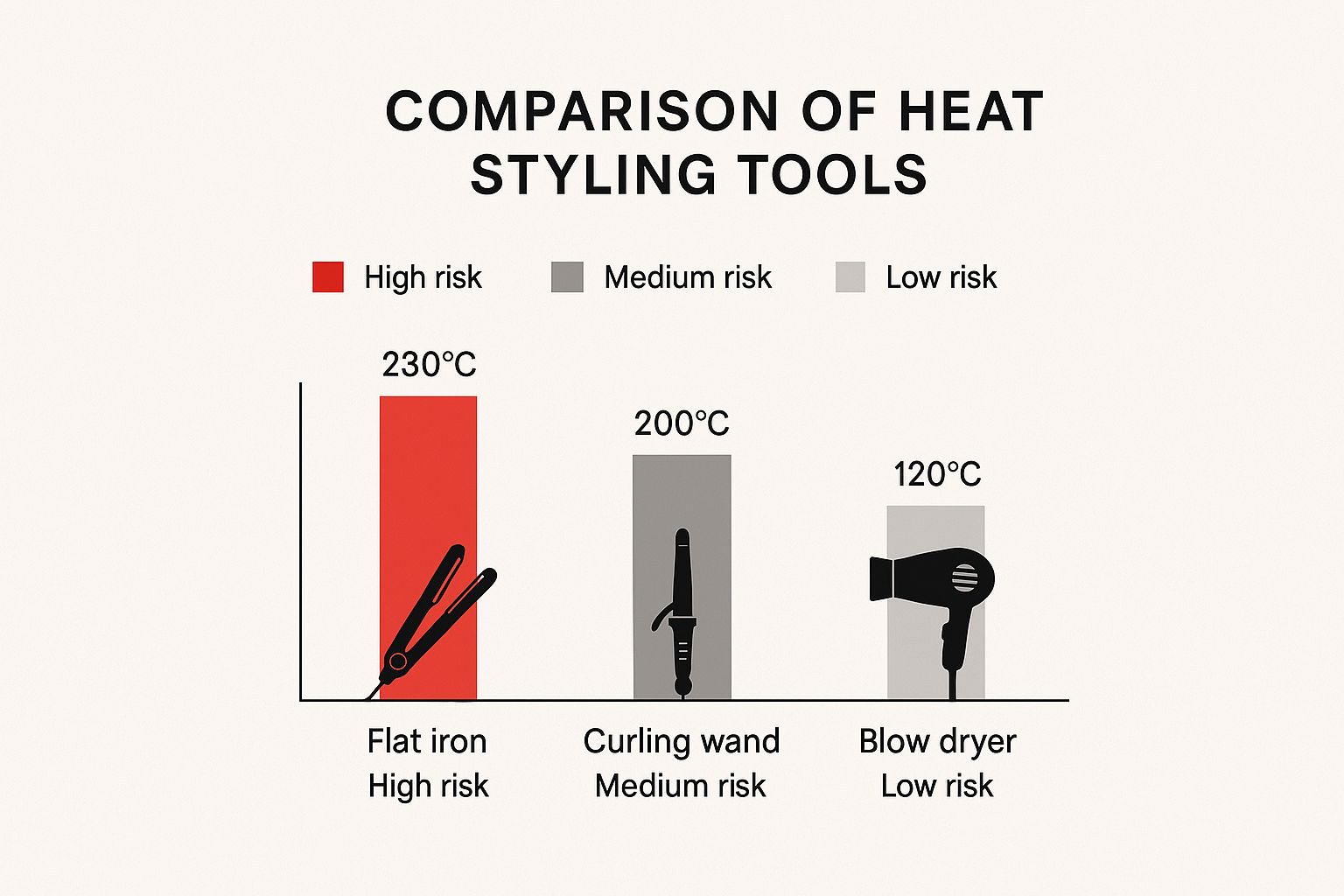
As you can see, tools like straighteners can reach scorching temperatures, posing a major risk to both the health and colour of your hair.
The Villains to Avoid
Just as important as knowing what to look for is knowing what to run from. There are a few common ingredients that are absolute nightmares for coloured hair, and learning to spot them is a game-changing skill.
The number one culprits are sulphates, especially Sodium Lauryl Sulphate (SLS) and Sodium Laureth Sulphate (SLES). These are harsh detergents that give you that super-rich, bubbly lather so many of us associate with being 'clean'. The problem is, they're too good at their job, stripping away everything—dirt, natural oils, and your expensive colour. Always, always look for shampoos labelled "sulphate-free."
Other ingredients to watch out for are certain types of alcohols (like denatured alcohol or isopropyl alcohol), which can be incredibly drying. In a similar vein, high concentrations of salts (sodium chloride) can also suck moisture out of your hair and contribute to colour fade.
To make this all a bit simpler, I’ve put together a quick-glance guide to the heroes and villains of haircare ingredients.
Ingredient Guide for Colour Treated Hair
This table breaks down the good guys you want in your products and the bad guys you should definitely avoid.
| Ingredient Type | Look For (The Heroes) | Why It Helps | Avoid (The Villains) | Why It Hurts |
|---|---|---|---|---|
| Cleansers | Gentle, sulphate-free cleansers (e.g., Cocamidopropyl Betaine) | Cleans your hair without aggressively stripping colour or natural oils. | Harsh sulphates (SLS, SLES) | Literally washes your colour and moisture down the drain, causing rapid fading. |
| Moisturisers | Natural oils (Argan, Jojoba), Shea Butter, Glycerine | Seals the hair cuticle to lock in moisture, add shine, and fight frizz. | Drying alcohols (e.g., Alcohol Denat.) | Dries out the hair shaft, making it brittle, dull, and prone to breakage. |
| Strengtheners | Hydrolysed Proteins (Keratin, Silk), Amino Acids | Rebuilds your hair's internal structure from the inside out to repair chemical damage. | Sodium Chloride (Salt) | Can dry out hair and contribute to colour stripping, especially in high amounts. |
| Protectants | Silicones (Dimethicone), UV Filters | Creates a protective barrier against damaging heat and sun exposure. | Overuse of heavy, non-soluble silicones | Can cause product build-up over time if you're not using a clarifying shampoo. |
Becoming a savvy label-reader is like gaining a superpower. It allows you to confidently choose products that will protect your investment, keeping your colour beautiful and your hair healthy, strong, and radiant for weeks on end.
Top Product Picks for Colour Treated Hair
Alright, now that you know exactly what to look for on an ingredient label, let's talk about the fun part: shopping! The sheer number of products out there for colour treated hair can feel a bit overwhelming, but I'm here to cut through the noise. Think of this as your personal cheat sheet for building a haircare routine that keeps your colour looking fresh from the salon.
And it’s clear we’re not alone in wanting great hair. The Aussie hair care market is booming, pulling in around US$1.07 billion in revenue and it’s still growing. This just goes to show how much we value products that actually work. If you're curious about the numbers, you can dive deeper into these consumer trends and market insights on Statista.
So, let's get into my top picks, category by category. I’ll connect each one back to the hero ingredients we've just covered, so you’ll understand not just what to buy, but why it's the right choice for your hair.
Your Essential Cleansing Duo
First things first, a solid routine always starts with a great shampoo and conditioner. This is the foundation for everything else.
-
Colour-Safe Shampoo: Your non-negotiable here is a sulphate-free shampoo. Seriously. These formulas use much gentler cleansing agents that get rid of dirt and oil without roughing up the hair cuticle and literally washing your expensive colour down the drain. This is the absolute cornerstone of keeping your colour vibrant.
-
Hydrating Conditioner: After cleansing, you need to lock it all down. Look for a conditioner packed with nourishing goodies like shea butter, argan oil, or glycerine. These ingredients are brilliant for smoothing the hair cuticle right back down, sealing in moisture, and leaving your hair feeling soft and easy to manage.
The Treatment Powerhouses
Let's be honest, colouring can leave your hair feeling a bit parched and fragile. That’s where targeted treatments come in. They give your hair a much more concentrated hit of repair and hydration than your daily conditioner can.
A weekly hair mask isn't just a luxury; it's essential maintenance. Think of it like a big drink of water for your hair, refilling its moisture reserves and strengthening it against whatever you throw at it next.
Here are the key players you'll want to add to your team:
-
Intensive Repair Masks: Once a week, treat your hair by swapping your usual conditioner for a deep conditioning mask. The best ones are full of hydrolysed proteins (like keratin or silk) to rebuild strength from the inside out, plus rich oils to bring back that gorgeous softness and shine. Pro tip: wrap your hair in a warm towel after applying the mask to help the ingredients penetrate even deeper.
-
Leave-In Treatments: A good leave-in is your daily bodyguard. You just spritz or smooth it onto damp hair after a shower, and it provides a lasting layer of moisture, makes detangling a breeze (which means less breakage!), and often includes UV filters to protect your colour from the sun. Formulas with argan oil are fantastic for taming frizz and adding shine without that heavy, greasy feeling.
Specialised Solutions and Finishers
Beyond the basics, a few extra products can be total game-changers, especially when you're dealing with specific colour challenges or just the wear and tear of daily life.
For Banishing Brassiness If you're a blonde or have lightened hair, you know the struggle against those sneaky yellow or orange tones is very, very real. This is where toning products become your best friend. For anyone wanting to keep their blonde looking bright and beautiful, you can absolutely banish brassiness with targeted solutions like the RPR Blonde Gift Pack.
- Purple or Blue Shampoo: These are essentially toning shampoos that work to neutralise those unwanted brassy tones. Purple shampoos cancel out yellow in blonde hair, while blue shampoos work against orange tones in lightened brown hair. Just swap it in for your regular shampoo about once a week to keep your colour looking cool and salon-fresh.
For Everyday Defence Finally, don’t forget the finishing touches that shield your hair from the elements.
-
UV Protectant Sprays: The Aussie sun is no joke, and it's one of the biggest culprits behind colour fade. A lightweight spray with UV filters is like sunscreen for your hair, protecting it from the rays that break down those precious colour molecules.
-
Heat Protectants: If you use any kind of heat styling tool, this is non-negotiable. Always, always apply a heat protectant before you blow-dry, straighten, or curl. It creates a barrier that stops high temperatures from wrecking your hair's cuticle and dulling your beautiful colour.
Tackling Common Colour-Treated Hair Woes
Even when you follow your colour treated hair care routine to the letter, hair can have a mind of its own. It happens to the best of us! Think of this as your go-to troubleshooting guide for those frustrating moments when your colour just isn't cooperating.
We'll walk through the most common headaches, from beautiful blondes turning brassy to that dreaded dry, straw-like feeling. Don't stress—for every problem, there’s a practical fix waiting.
"Help! My Blonde Hair Is Turning Brassy."
This is, without a doubt, the number one complaint I hear from anyone with lightened hair. Brassiness is that unwanted creep of yellow or orange tones that can make a crisp, cool blonde look dull and cheap. It usually happens as your salon toner naturally fades, which allows the hair's underlying warm pigments to peek through.
Luckily, the solution is simple colour theory. To counteract yellow, you need violet. To fight off orange, you need blue.
- Your Secret Weapon: A high-quality purple shampoo.
- How to Use It: You only need to swap your regular shampoo for a purple one about once a week. Any more than that and you risk over-toning and giving your hair a slight lilac hue. Let it sit on your hair for 3-5 minutes before rinsing—this gives the pigments enough time to do their job and neutralise those pesky warm tones.
You can think of your purple shampoo as a mini toning session at home. It deposits just the right amount of violet pigment to keep your blonde looking bright and fresh between salon visits.
Mastering how to maintain your blonde is a real game-changer. If you want to dive deeper, we have a complete guide on how to keep your blonde hair bright.
"My Colour Fades Way Too Fast!"
There’s nothing more frustrating than spending your hard-earned money on the perfect shade, only to see it wash down the drain within a few weeks. The usual suspects? Scalding hot water, harsh sulphate-based shampoos, and washing your hair too often. Each of these can lift the hair's cuticle, giving those precious colour molecules an easy escape route.
Your Solution: It's all about adopting a gentler routine.
- Wash Less: Try to stretch it to 2-3 times a week. Dry shampoo will be your best friend on the in-between days.
- Lower the Temp: Always wash with lukewarm water. A final rinse with cool water is even better, as it helps seal the cuticle shut.
- Clarify Smartly: Once a month, use a gentle, colour-safe clarifying shampoo. This isn't about stripping your colour; it's about removing the mineral buildup from hard water or product residue that can coat your hair and make the colour look muddy. A quick clarify will let your true vibrancy shine through again.
"My Hair Feels So Dry and Brittle."
The chemical processing involved in colouring, especially when bleaching, can really take a toll on your hair's internal structure. It breaks down the natural proteins, leaving strands weak and susceptible to snapping. If your hair feels a bit mushy when wet and snaps easily when dry, it's sending out an SOS for protein.
Your Solution: Reach for a targeted protein treatment. How to Fix It: A weekly hair mask packed with ingredients like hydrolysed keratin or silk proteins will be your hero. These proteins have been broken down into molecules small enough to get inside the hair shaft and patch up the damage from within, rebuilding strength where it’s needed most. Just be mindful not to overdo it—too much protein can make hair feel stiff. It's all about finding that perfect balance with your hydrating masks.
Got Questions About Your Coloured Hair? We've Got Answers
Even when you think you've got your routine down pat, little questions about keeping your colour vibrant can pop up. Let's run through some of the most common ones I hear from clients, so you can feel totally confident in your hair care game.
How Often Should I Be Washing My Hair?
This is a big one! I always recommend washing a maximum of 2-3 times per week. Honestly, over-washing is the number one culprit for fading colour. It strips away not just those precious colour molecules, but also the natural oils your hair needs to stay healthy and moisturised.
When it is wash day, turn down the heat. Always use lukewarm or cool water, because hot water swells the hair cuticle wide open, letting your colour literally wash down the drain. For those in-between days, a great dry shampoo will be your new best friend—it soaks up oil at the roots and gives you a nice little volume boost, no water required.
Is It Okay to Just Use My Regular Shampoo?
Please don't! It's a common mistake, but most standard shampoos contain harsh detergents like sulphates (SLS). Their job is to clean aggressively, and they're not smart enough to distinguish between dirt and the beautiful colour you paid for.
Think of it like this: you wouldn't wash a delicate silk blouse with harsh laundry powder designed for footy socks. Using a regular shampoo on coloured hair is the same idea—it's just too rough and will strip the life and colour right out of it.
Your best bet is to always stick with products that are clearly labelled "colour-safe" or "sulphate-free." They're formulated to cleanse gently, protecting your investment.
Help! How Do I Fix Brassy Tones?
Ah, brassiness—those unwanted warm, orangey, or yellow tones that sneak into lightened hair as your initial salon toner starts to fade. Don't panic, the fix is actually pretty simple and comes down to a bit of basic colour theory.
You can easily manage this at home by swapping your usual shampoo for a specialised toning one, just once a week. It's a small change that makes a massive difference.
- For yellow tones in blonde hair, you'll want a purple shampoo.
- For orange tones in brunette hair, grab a blue shampoo.
Just let it sit on your hair for about 3-5 minutes before you rinse. This gives the pigments enough time to work their magic, neutralising those warm tones and bringing back that cool, fresh-from-the-salon look.
Can I Still Use Heat Styling Tools?
Absolutely, but you need to be smart about it. Colouring makes your hair more porous, which unfortunately means it's also more vulnerable to heat damage. High temperatures can not only weaken the hair strand but can also break down the colour molecules themselves.
The golden rule here is to always, always apply a quality heat protectant spray before a blow dryer, straightener, or curling wand even gets close to your hair. This simple step creates a shield, minimising the damage and helping to stop your colour from fading under the heat. And whenever you can, dial down the temperature on your tools to the lowest setting that still gets the job done.
Ready to build the perfect routine for your coloured hair? On Line Hair Depot has a massive selection of professional, colour-safe products from all the top brands. Explore our shampoos, treatments, and styling essentials today. You'll find everything you need at On Line Hair Depot to keep your colour vibrant and your hair healthy.


